Posts

Tristana (1970) ***1/2

Image
Luis Buñuel 's Tristana (1970) revisits many of the same themes and fascinations that the director explored in his earlier films  Viridiana  (1961) (my review here ) and  Diary Of A Chambermaid   (1964) (my review here ). Catherine Deneuve is radiant as the titular character, Fernando Rey  is insufferable as her guardian, Don Lope, and Franco Nero is underutilized as her lover, Horacio. Tristana is another surreal psychosexual journey of possession and circumstance from master   Buñuel that I think I may appreciate more on a second viewing.   You can find my  Luis Buñuel Films Ranked  list  here .
Fist Of The North Star (1986) ****

Image
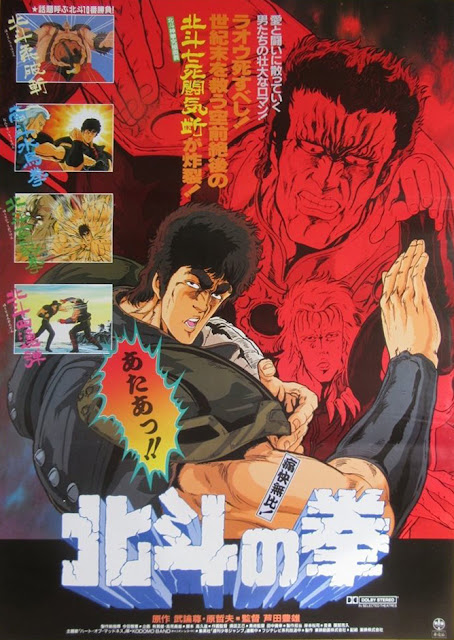
Heavily influenced by 1979's  Mad Max  [ review ] and Bruce Lee , Fist Of The North Star  (1986) is an ultraviolent, post apocalyptic, actionfest from director Toyoo Ashida  ( Vampire Hunter D   (1985) [ review ]). This western-themed anime is chock-full of i nventive, insanely over-the-top gore, s toic (toxic) masculinity, t estosterone-fueled, absurdly powerful, muscle-bound men, a tmospheric sound design, a lush and kickass score by Katsuhisa Hattori , two memorable songs from Kodomo Band  (including the fist-pumping anthem “ Heart Of Madness ”), and  beautiful, striking (literally) animation. While the more philosophical aspects of the story may get lost in the many, many epic battles, there is a definite theme of man’s destructive nature and the dangers of unchecked power. I spent countless hours of my teenhood watching  FOTNS . I hadn't watched the film since 2009—it's a touch on the long side, but it remains e ndlessly entert...

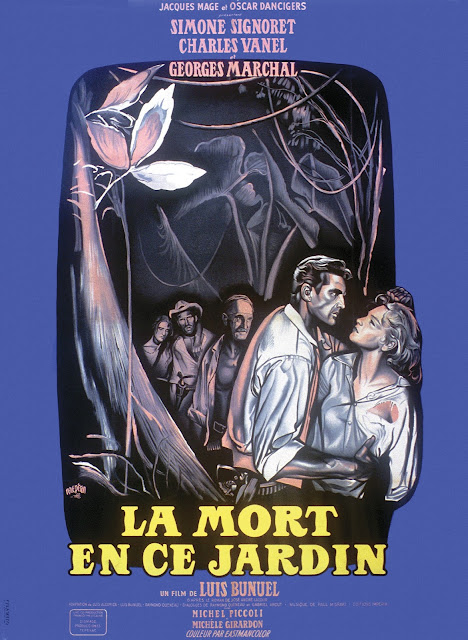
Death In The Garden (1956) ***1/2

Image
While on the surface it appears to be mostly a straightforward action/adventure drama, Death In the Garden   (1956) does contain  Buñuel ian surrealist touches and director trademarks. The political overtones might lead some viewers to believe the film is a kind of rally cry, but Buñuel is more interested in human behavior and the choices his characters make.  Those characters comprise a kind of ragtag band of rogues, who expose the cynical quality and selfishness that human beings often fall prey to when forced into a desperate, life-threatening situation (in this case being pursued by soldiers in the jungle). Buñuel pairs Simone Signoret  with  Charles Vanel , both of whom appeared together the previous year in Henri-George Clouzot 's Diabolique  (my review here ). Vanel also starred in another Clouzot classic, 1953's  The Wages Of Fear  (my review here ), which bears more than a few similarities to DITG .  It's a different kind of pic...

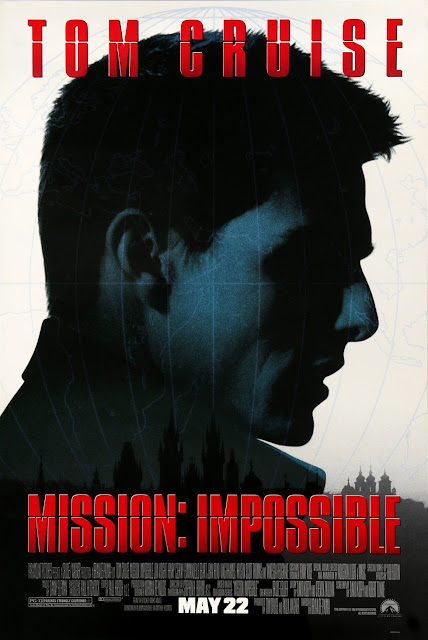
Mission: Impossible (1996) ****

Image
I used to think that Mission: Impossible (1996) wasn't very De Palma esque, but on this latest watch (my first time in 13 years and with the film looking the best I've ever seen it on 4K UHD) I realized that it very much is so. Sure, it's an action spectacle that requires major suspension of belief by the end of the film, but there are so many great set pieces and thrilling sequences prior to that. De Palma employs his usual bag of camera and editing tricks to bring this world to the cinematic landscape, but does it in a subtler, more accessible way to create superb espionage entertainment. I'm aware that cast members of the original TV series  (which I'm also a big fan of) were not happy with the direction the characters were taken, but ignoring that isn't difficult for me to do. One of the reasons for that is that M:I  is "big" blockbuster '90s fun. This movie is a ride; it's not  John le Carré . That's not to say the film is dumb—it...

The Milky Way (1969) ****

Image
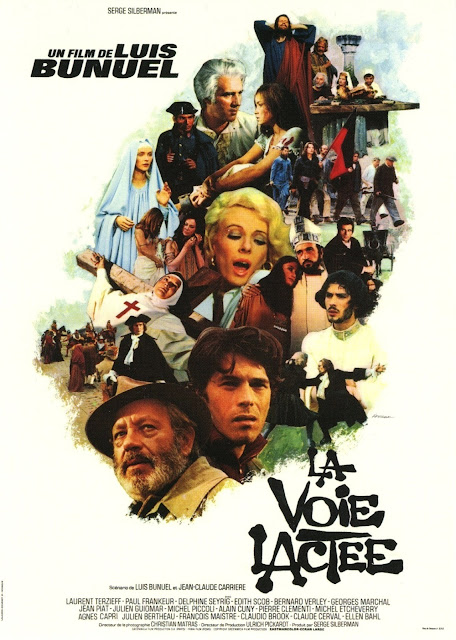
The Milky Way ( 1969) is  Luis Buñuel 's picaresque pilgrimage concerning two vagrant vagabonds (and other characters) as they travel across time and space, encountering various people (including Jesus, the Virgin Mary, and the Devil), all of whom have discussions about Christianity, dogma, and heresies (in great, historically accurate, detail). It's a surreal satire featuring many of Buñuel's usual players, and a perfect example of his charm and style—opening up plenty of questions, and never providing answers. You can find my  Luis Buñuel Films Ranked  list  here .
The Party (1968) ***

Image
The Party (1968) is a difficult picture to rate. On one hand, it's a really funny, experimental film (though it certainly borrows a lot from Jacques Tati ) that showcases Peter Sellers ' comedic genius. On the other hand—while perhaps not as egregious as Mickey Rooney in Blake Edwards ' other, more well-known, classic Breakfast At Tiffany's (1961)—there is the elephant in the room of Sellers in brownface  (and also a literal elephant in the room in the film, the poor thing).  Though I don't think the racial stereotyping in The Party comes from a place of hate, it is such a central part of the film (now considered incredibly outdated and potentially offensive) that it's hard to ignore. But if you can look past that, there is a lot of Chaplin /Tati-esque fun to be had with the various sight gags, a typically groovy score by Henry Mancini  (including the dreamy song " Nothing To Lose ", sung beautifully by Claudine Longet ), and lots of super sexy, s...

Viridiana (1961) ****

Image
The first of three films (one being a short) that  Luis Buñuel  made with  Silvia Pinal , Viridiana  (1961) was considered by some to be blasphemous and it was banned in Spain, only seeing release there in 1977 when Buñuel was 77 years old. Viridiana has a lot of bold symbolism and sexually suggestive imagery and dialogue. It feels like Buñuel at his most Bergman esque. It has a protagonist whose piety is taken advantage of at every turn, by both strangers and relatives alike. As a piece of filmmaking that presents human beings as realistic, complex, and sometimes base in nature, it's a masterwork. You can find my  Luis Buñuel Films Ranked  list  here .
The Mirror Crack'd (1980) ***

Image
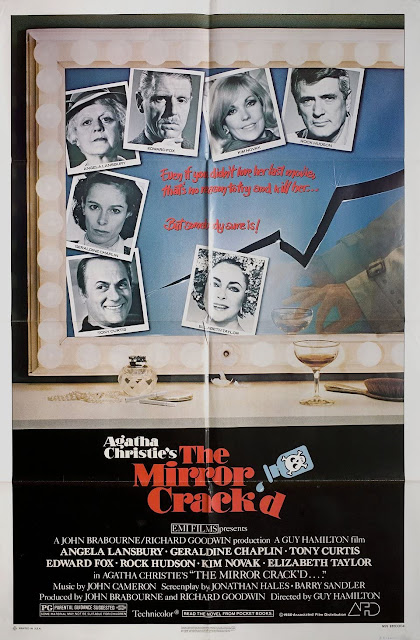
The Mirror Crack'd  (1980) was the third of four  Agatha's Christie  adaptations—following 1974's  Murder On The Orient Express   (my review here ) and 1978's  Death On The Nile   (my review here )—made by producers John Brabourne and Richard Goodwin . It's my least favorite of the three mentioned (I have yet to see 1982's  Evil Under The Sun ), and I have to admit to being a much bigger fan of Hercule Poirot as protagonist (as good as Angela Lansbury is as Miss Marple here).  But there is of course another great ensemble cast (though not as large or as well known as the previous two Brabourne/Goodwin Christies), some choice one-liners including humor that pokes fun at both the cast of this film and other associated actors, and frequent Bond director Guy Hamilton  does a solid job. The best and most amusing part of the film though (and honestly the main draw were I to revisit this one) is easily the catty, campy quarrels between Eli...

Event Horizon (1997) ***1/2

Image
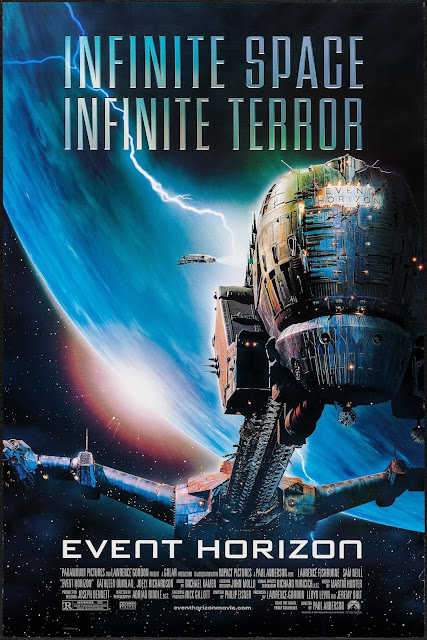
Event Horizon (1997), Paul W.S. Anderson and Philip Eisner ’s Lovecraftian   Hellraiser / Alien / The Shining / Solaris hybrid (my reviews for the first three of those films here , here , and here ), was a box office flop that has gone on to become a cult favorite.  EH wears its influences on its sleeve and some would accuse it of being too derivative but there is too much goodness here to dismiss it outright. It’s uneven, there’s a good deal of silliness and tropes galore in the final third, and some of the visual fx are a bit dated but there’s also some undeniably arresting images, wonderful makeup, impeccable production design, and ideas that, if they had been explored with more finesse, could have resulted in something truly special. As it is, EH is a flawed but fun sci-fi/horror/actioner with a great cast that, despite its shortcomings, has immense rewatchability. 

Diary Of A Chambermaid (1964) ***1/2

Image
Almost completely devoid of the surrealism present in all of  Luis Buñuel 's films that I've seen so far, Diary Of A Chambermaid (1964), the first of six screenplays Buñuel co-wrote with  Jean-Claude Carrière , is based on Octave Mirbeau 's 1900 novel . While my least favorite of the Buñuel films that I've seen, it's still a very good drama with comic touches and great performances. Jeanne Moreau  is a good Célestine, the titular character, but I can't help but wonder how the film would have differed if Silvia Pinal —Buñuel's original choice (rejected by the French producers)—had been cast. You can find my  Luis Buñuel Films Ranked  list  here .